

Florencio Gelabert
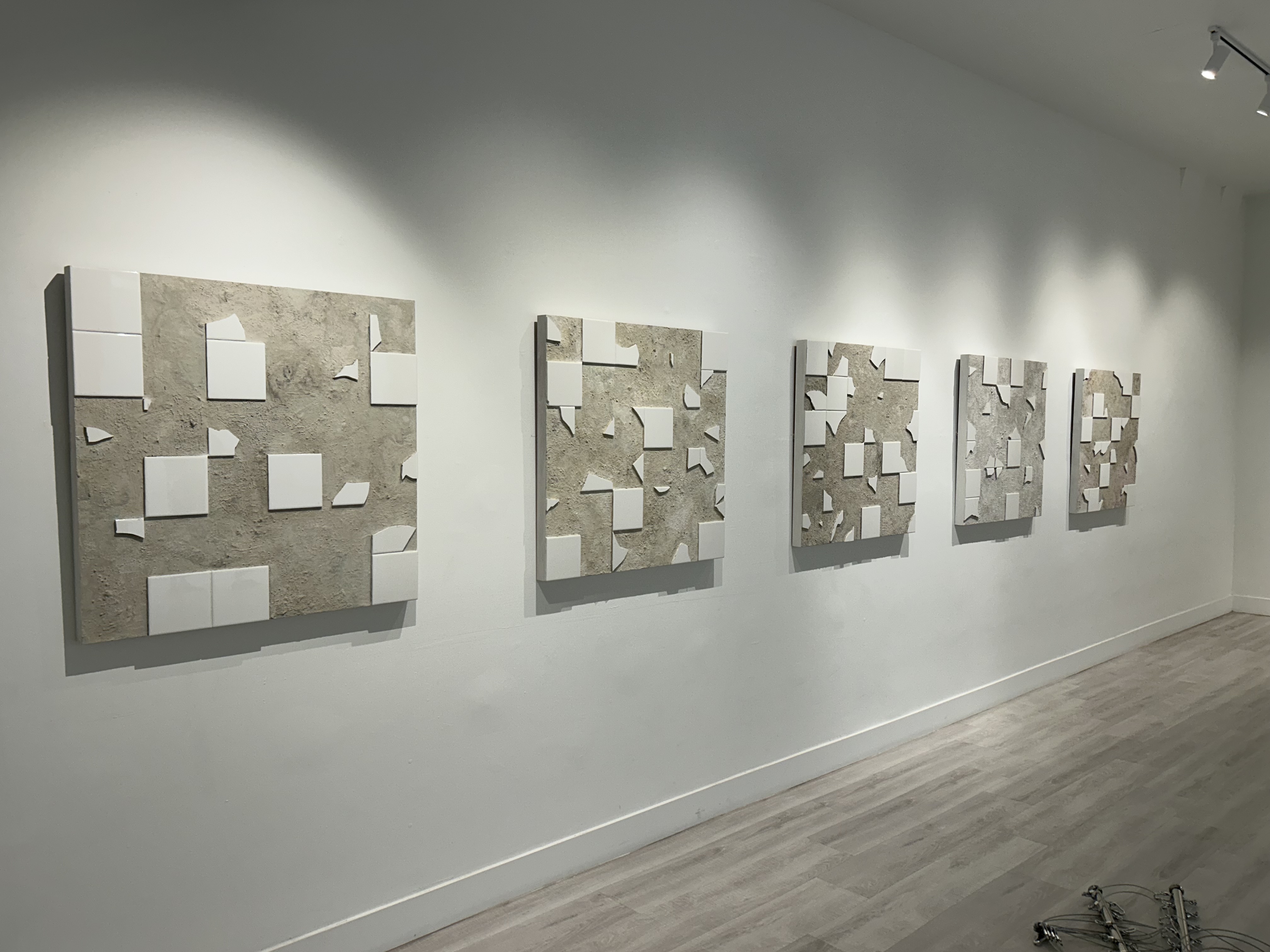
Florencio Gelabert (Havana, Cuba) is a sculptor whose career spans more than four decades, shaped by Arte Povera, Land Art, and Postminimalism. His work explores the tensions between nature and architecture, ruin and memory, the organic and the constructed—creating a visual territory where the ephemeral and the enduring remain in constant dialogue.
In 1988, he moved to New York following an artist residency at Socrates Sculpture Park. He currently divides his time between New York and Miami. His academic training includes the San Alejandro Academy of Fine Arts (1981), the Higher Institute of Art in Havana (1989), and an MFA from the University of Miami (1998), grounding his practice in both technical rigor and conceptual experimentation.
Since the late 1980s, Gelabert has developed a body of work distinguished by innovative approaches to sculpture and installation. He has held solo exhibitions at institutions such as the Museum of Art + Design, the Patricia & Phillip Frost Art Museum, the Fort Lauderdale Art Museum, and the Jacobo Borges Museum. He has also participated in major international biennials, including the Havana Biennial, the Pontevedra Biennial, the Uppsala Contemporary Art Biennial, the Barro de América Biennial, and The (S) Files at El Museo del Barrio. His public art projects extend across the United States, Mexico, Cuba, Sweden, and Venezuela.
Gelabert’s work has been reviewed in publications such as The New York Times, Art Nexus, Art News, New York Arts, The Miami Herald, and Contemporary, and is featured in key books on Cuban and Latin American art. His sculptures are included in major institutional collections, including the Neuberger Museum of Art, Pérez Art Museum Miami, Museo Nacional de Bellas Artes (Havana), Museum of Latin American Art, Vin & Sprithistoriska Museet, Fondazione Benetton, the Cisneros Collection, and the Museum of Contemporary Art of Panama. Through his sculptural practice, Gelabert creates spaces of contemplation—where matter breathes, fractures, and recomposes—inviting viewers into a poetic encounter with time and transformation.